At Woolly Mammoth, Max Posner’s new play follows four writers wrestling with how to make a Hanukkah show for a Christmas-centered stage.
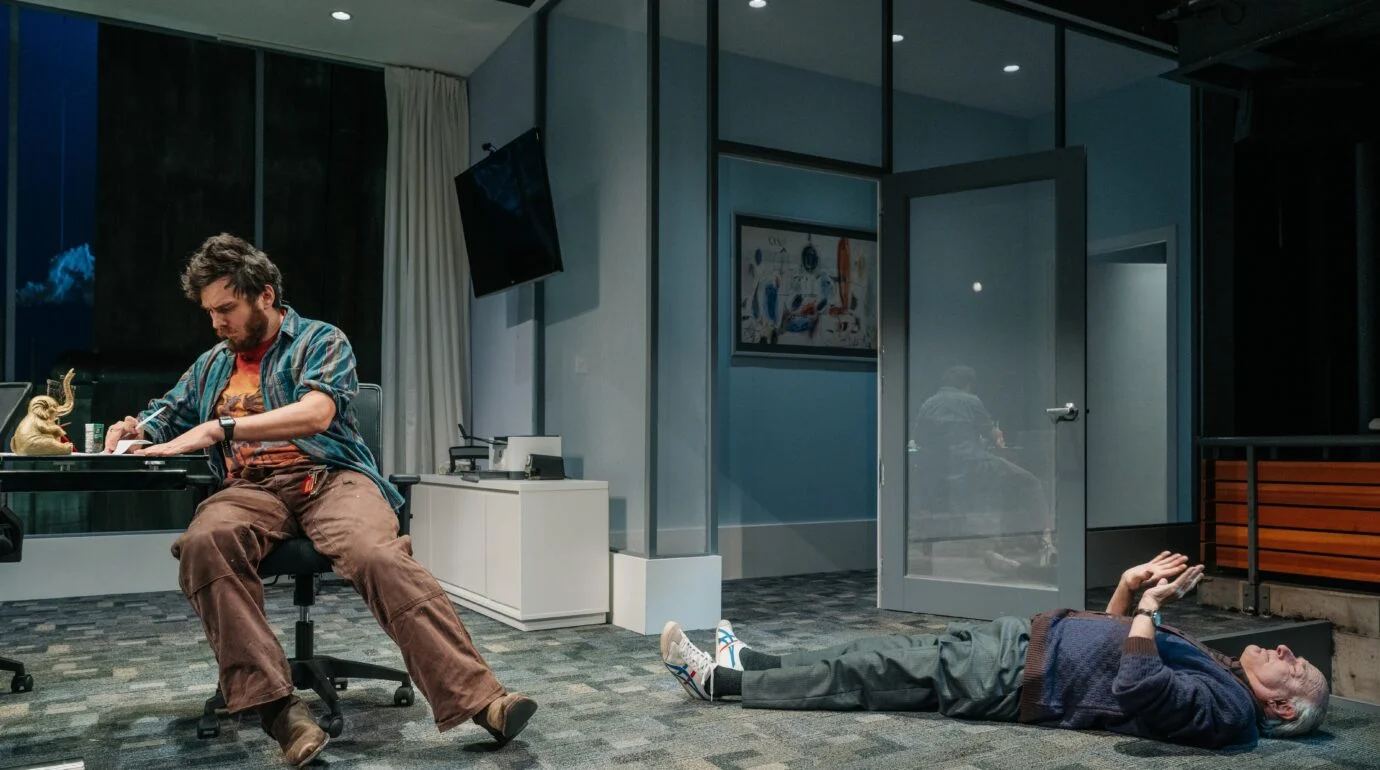
Max Posner’s Hanukkah Spectacular puts the work of making a play at its center. Four writers sit in a vacant New York talent-agency conference room, tasked with creating a Hanukkah production that can hold its own among America’s many Christmas shows. The premise turns a familiar theatrical assignment into the subject itself: the audience watches characters negotiate what a holiday show should say, and how it should say it. The world premiere runs Nov. 14-Dec. 13, 2026, at Washington, D.C.’s Woolly Mammoth Theatre Company.
Making the making visible
The setup gives Posner room to make creation itself the spectacle. He points to David Adjmi’s Stereophonic, which follows a band making an album, as a touchstone. Directed by David Cromer, Posner’s play tracks four people trying to turn a blank page into something performable. “That’s a process no one really gets to see, and it’s unique and absurd,” Posner said.
That structure shifts attention from a finished show to the arguments, compromises, and false starts that might produce one. It also gives the play a built-in tension: the writers have to make decisions in real time, while the audience can judge the choices they’re making. A conference room may seem like an uneventful setting, but its blankness suits a story about the pressure to invent a form before anyone knows what it should look like.
This is more significant than it looks. A play about writing a play can expose the assumptions that usually stay hidden behind polished performances: who gets to define a holiday’s meaning, which stories are considered accessible, and what theatrical entertainment is expected to deliver. The risk is that process can become its own subject without giving the audience much to hold onto. Posner’s premise will have to make the debate as compelling as the production the characters are trying to create.
A holiday show with harder questions
The writers soon discover the assignment is more demanding than it sounds. Hanukkah commemorates a successful but violent revolt; shaping that history into a bright, accessible entertainment raises questions about what gets softened for a broad audience. The show within the show becomes a place where religious meaning and theatrical ambition meet.
That tension gives the comedy, if the premise plays as comedy, a sharper edge. A holiday production often has to balance celebration with explanation, especially when it’s meant to reach people with different levels of familiarity with the tradition. The writers’ challenge isn’t simply to include historical material. They have to decide what a stage audience can absorb, what might be simplified, and whether the resulting entertainment still feels honest to the history it draws on.
And this is the part most people overlook: making a story accessible isn’t a neutral act. A choice to brighten, shorten, or redirect a difficult subject changes what the audience encounters. If you’re working in this space, that’s a familiar creative problem, but it’s rarely tidy. The play’s premise leaves room for the writers to disagree without suggesting that a single neat answer will settle the matter.
For Posner, the writing room’s conversations are as important as the work they’re meant to produce. The artists begin making a play, then find themselves caught in “this sort of endless, difficult, almost Talmudic conversation.” He sees that uncertainty as especially resonant now, though he allows it may simply feel more pronounced in the present moment.
That qualification matters. It keeps the play’s contemporary relevance from sounding like a claim that its conflicts belong only to this moment. Instead, the room’s debate can speak to a broader pattern: artists often have to make choices under competing demands, then live with what those choices leave out. The conversation may not resolve. That unresolved quality is the point.
Woolly Mammoth’s commitment
Posner credits Woolly Mammoth artistic director Reggie D. White and the company’s staff for backing the play with conviction. “A world premiere can only be as brave as the theatre standing behind it,” he said. That support gives this formally self-aware premise room to test how a holiday story can be shaped for the stage—and what it loses or gains in the process.
A world premiere also places the theatre inside the work’s first public test. The company’s backing gives Posner and Cromer a setting in which the play can take shape before an audience, while the subject itself asks what kinds of stories a theatre chooses to support. The statement about bravery is persuasive, though the production’s actual effect will depend on how the play handles its competing ideas onstage.
What the premise leaves open
The central question isn’t whether Hanukkah can support a theatrical spectacle; the production is already built around that possibility. The harder question is what kind of spectacle can carry the holiday’s history without smoothing away its difficulty. Posner’s frame gives the audience a chance to watch that decision being made, with all the friction that comes with it.
For now, the play’s most intriguing promise is its attention to the gap between intention and outcome. Four writers can begin with a clear assignment and still discover that the work raises questions they didn’t plan to answer. Whether that tension produces a satisfying show within the show remains to be seen. The argument itself may be the spectacle.

Discussion
Sign in to join the discussion.