Mona Pirnot’s unconventional monologue pairs everyday observations with Jack D. Coen’s choral score to create an unexpectedly moving theatrical experience.
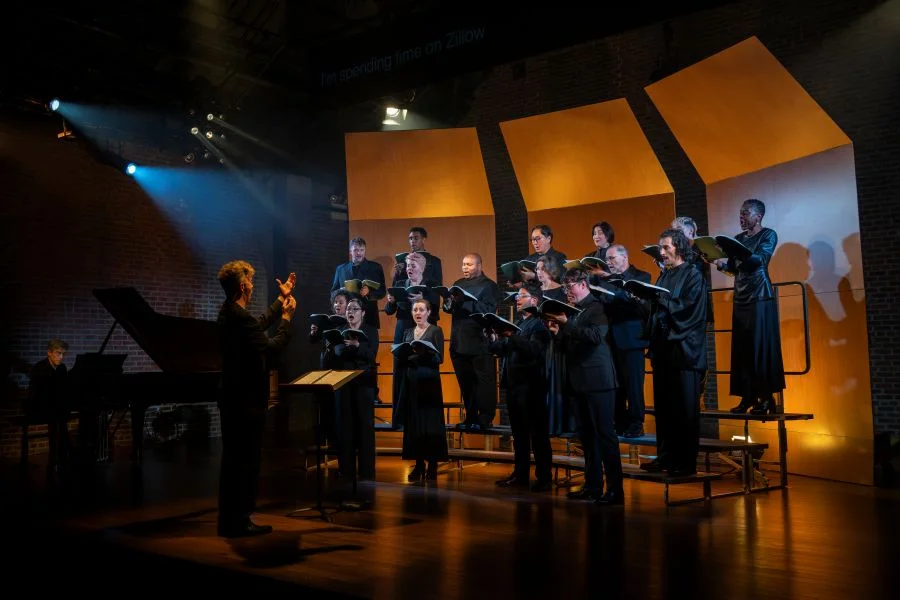
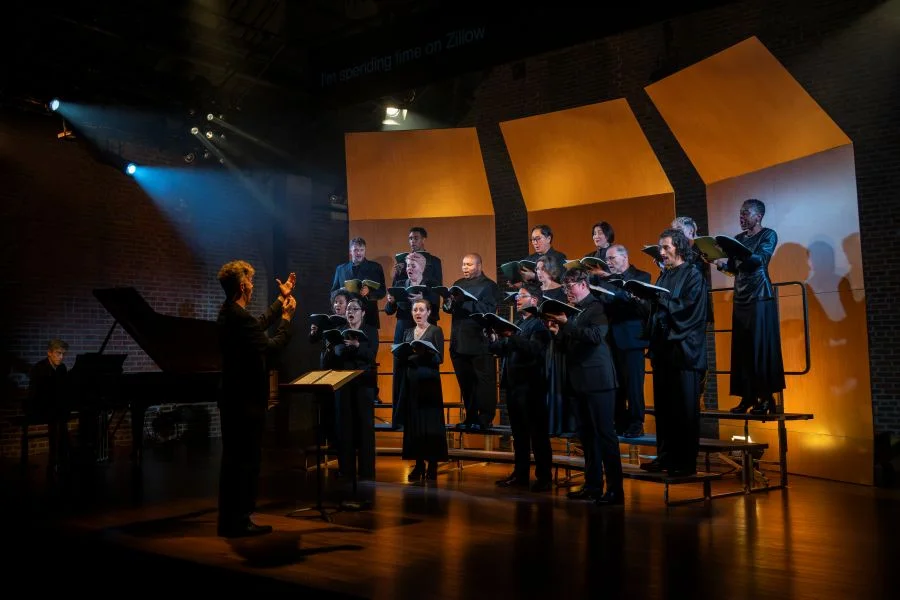 I Became We is the rare show I can recommend without adding a disclaimer. At the Atlantic Theater, playwright Mona Pirnot’s unruly contemporary monologue is sung by a 16-member choir, with composer Jack D. Coen at the piano. The format sounds like a stunt. It turns out to be the show’s engine: Coen’s measured, old-school score gives Pirnot’s sharp, everyday language room to land. The production runs for another week at the Atlantic.
Pirnot is comfortable calling the form a “gimmick,” provided it comes with “absolute commitment.” Her earlier plays set that pattern. In [I Love You So Much I Could Die](https://www.nytw.org/show/i-love-you-so-much-i-could-die/), presented at New York Theatre Workshop in 2024, Pirnot faced away from the audience and cued a laptop to speak about her sister’s mysterious illness in a computerized voice, punctuating the monologue with plaintive guitar songs. In [I’m Assuming You Know David Greenspan](https://atlantictheater.org/production/im-assuming-you-know-david-greenspan-2/), staged at the Atlantic the following year, David Greenspan played four characters in a dialogue about Pirnot and her insecure playwright friends.
Now a formally dressed choir stands on risers, opens its binders, and sings about Adam Sandler movies, Brooklyn coffee meetings, Zillow listings, and the fraught question of whether the narrator should have children with her “jumpy and nervous” husband. The oddness doesn’t wear off. As Pirnot puts it, audiences may initially wonder whether the show will stay this way for the whole performance. It will, she said, but the aim is for the experiment to deepen into an experience.
 That deepening depends on the friction between Pirnot’s digressive writing and Coen’s disciplined music. Coen says they began by listening to contemporary and experimental choral work, then found that older musical styles made the modern text more effective. The score draws on Handel and Rachmaninoff, with a strong debt to 19th-century hymns and choral music. Coen, music director at [Church of the Epiphany](https://www.epiphanychurch.nyc/special-musical-performances-and-concerts), calls himself a Bach obsessive and packed in as many fugues as he could. He describes the result as late Romantic, with occasional turns toward 20th-century harmony and Baroque forms. His other musical work is [equally idiosyncratic and accomplished](https://www.jackdcoen.com/music).
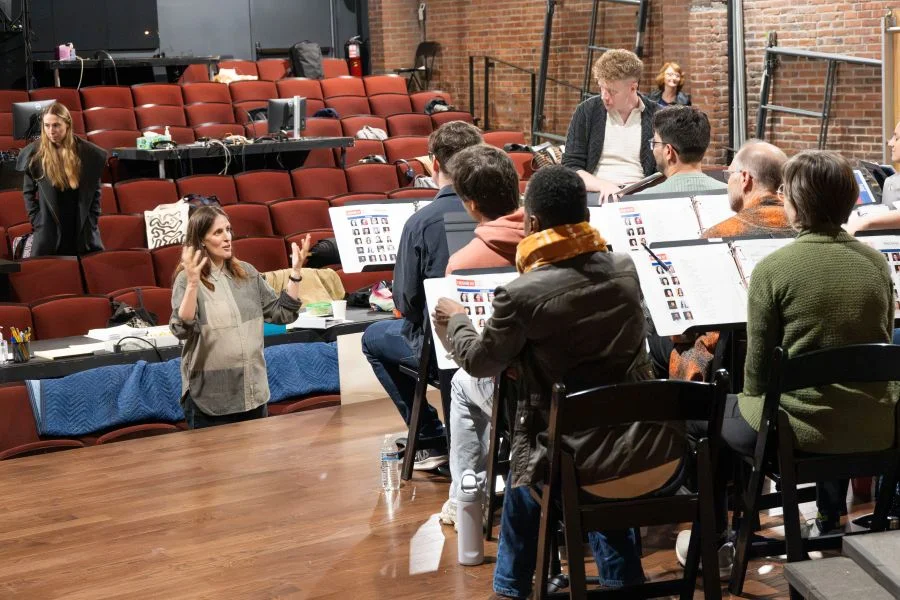 The idea began at a benefit concert for [Hear Your Song](https://www.hearyoursong.org/), a New York nonprofit that pairs songwriters with children facing physical and mental illnesses. Pirnot was volunteering when a choir performed a child’s song about axolotls. The plain language, carried by a choir, moved her. She was also drawn to the way a choir works as theatre: its members perform without acting, leaving the audience to study individual faces and imagine the lives behind them.
Finding the right balance took trial and error. Pirnot first wrote monologues for Coen to set to music. They disagreed about rhyme—he wanted it, she didn’t—and settled on rhyming couplets for roughly 15 percent of the finished text. The rest moves through free verse, repetition, and dialogue, loose in sound but carefully shaped. Eventually, they began writing together in the same room, working through every note and syllable. Their first piece made that collaboration click: a Handel-like setting of a street interview from *Jimmy Kimmel Live*, [“What Do You Know About the Female Body?”](https://www.youtube.com/watch?v=earRJKrE8Bw).
The score runs 210 pages, and the 16 singers had only six days of rehearsal to get the production ready. Choral contractor Marjorie Daley assembled performers with decades of experience in the field. The demanding schedule and unusually frank text tested them in new ways, but Coen says some singers described the show as the culmination of what they had wanted to do as choral performers. Pirnot added another measure of success: “Finally I’m singing in English!”
That response points toward a future beyond the Atlantic. Pirnot says *I Became We* is her first major work that can be licensed, and she hopes amateur, school, and other choirs will perform it around the world. Coen can imagine a full-orchestra version in a concert hall. For Pirnot, the fact that the production premiered as a play matters too: she likes that the label stretches what theatre can contain.
Seen Around Town
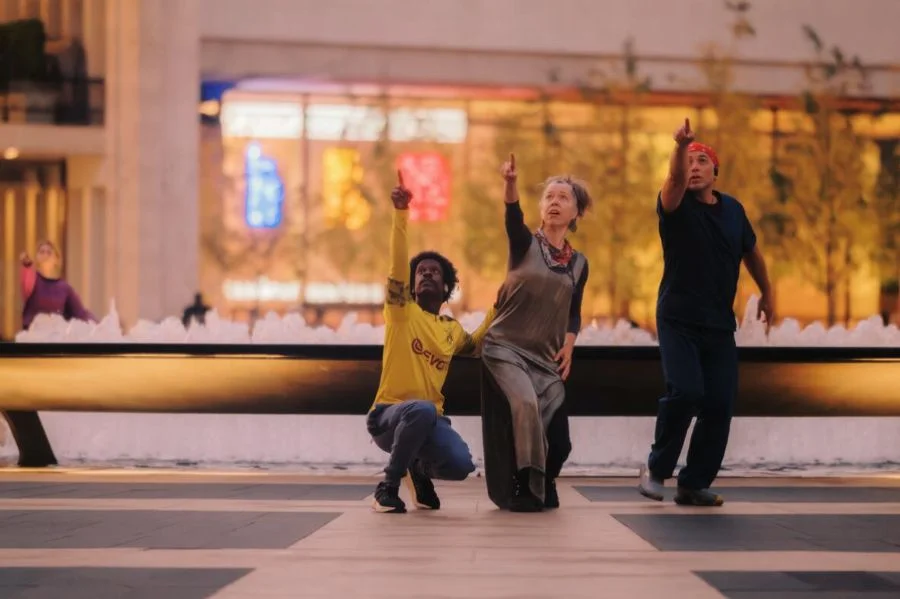
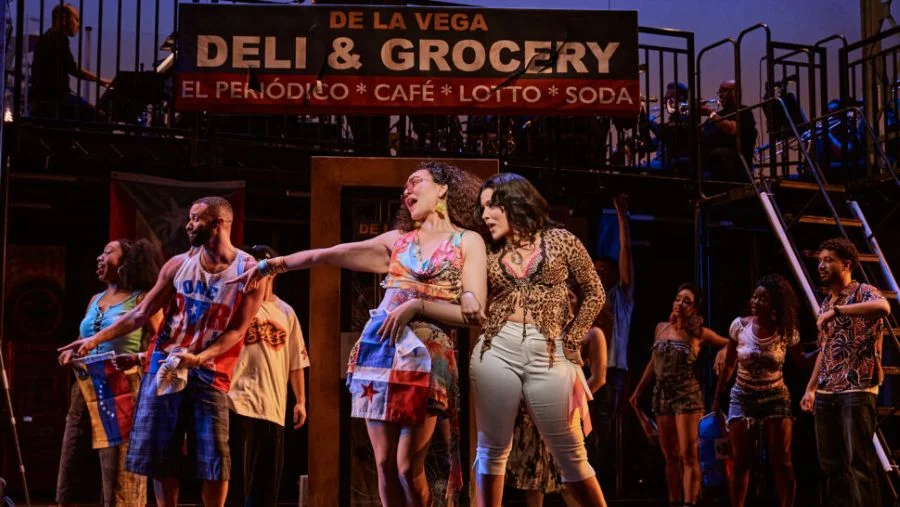
Roundabout’s new production of [The Imaginary Invalid](https://www.roundabouttheatre.org/production/2026-2027-season/the-imaginary-invalid/) has split critics between [enthusiastic praise](https://www.nytimes.com/2026/10/22/theater/imaginary-invalid-review-bill-irwin-moliere.html) and [sharp rejection](https://www.timeout.com/newyork/news/broadway-review-the-imaginary-invalid-gasps-for-moliere-102326). That disagreement raises a useful question: can a comedy succeed when audiences can’t agree whether it’s funny? The division here appears to be about comic taste, rather than the kind of dispute over content associated with [Slam Frank](https://www.americantheatre.org/2026/11/03/slam-franks-not-so-secret-weapon-multi-and-meta-talented-olivia-bernabe/) or *You Can See Everything*. I had a terrific time. Rachel Bloom’s even-tempered Toinette offers a steady point amid a cast aiming for flamboyant, competitive scene-stealing. Karen Perry’s costumes, along with Nikiya Mathis’s hair and wigs, help push the comedy into a deliberately elevated register. Brandon J. Dirden’s direction is broad, but the result felt buoyant to me. I would have gone just to watch Bill Irwin, the peerless clown who adapted the play; the production delivers plenty of gloriously committed ham. A colleague sat in silence, though, and others preferred last year’s Red Bull staging, adapted by Jeffrey Hatcher—a production I [discussed with him](https://www.americantheatre.org/2025/05/30/funny-with-a-little-teeth-2-playwrights-on-the-lineage-and-lens-of-moliere/) but didn’t see. Your mileage may vary. At Lincoln Center’s Josie Robertson Plaza, Andrew Schneider’s *Plaza* turned an hour-long audio walk into an unexpected dance performance. Wearing earbuds, the audience followed Schneider’s narration from the Revson Fountain around the campus, through its architecture and its history as Lincoln Square and, earlier, a Native American trading post. The piece, [commissioned by Lincoln Center](https://www.lincolncenter.org/series/lincoln-center-presents/plaza-374), was made with Curtis Thomas, Ivey Lowe, Ryan Gamblin, Brad Davis, and Saúl Ulerio & Co. At the end, dozens of people who had been circulating among the crowd launched into an extended, flash-mob-style dance around the fountain. It changed how I’ll see the plaza and the people moving through it. Fellow audience members included Becky Ann Baker, whom I’d seen in a Richard Greenberg play at Lincoln Center Theater [two decades earlier](https://www.lct.org/shows/the-house-in-town/), and David Byrne, whose immersive production [Theater of the Mind is running in Chicago](https://www.goodmantheatre.org/show/theater-of-the-mind/). Schneider is also known for [Youarehowhere](https://www.americantheatre.org/2016/07/06/6-shows-that-perfectly-combine-tech-and-text/). A presentation of scenes from [The Reckoning](https://www.dasharts.org.uk/the-reckoning) brought the everyday fear and indignity of wartime Ukraine to Teatro LATEA on the Lower East Side. Playwrights Anastasiia Kosodii and Josephine Burton created the work with U.K.-based Dash Arts and [the Reckoning Project](https://www.thereckoningproject.com/), a Ukraine-based effort to document Russian war crimes. The play had an acclaimed run at London’s Arcola Theatre [last year](https://www.theguardian.com/stage/2025/jun/06/the-reckoning-review-arcola-theatre-anastasiia-kosidii-josephine-burton), with further U.K. dates planned. Its U.S. showing, part of the [Ukrainian Cultural Festival](https://www.razomforukraine.org/ucf2026/), aimed to build interest in a future American run. Sasha Odesa and Petro Ninovskyi gave the scenes force, but the evening’s most riveting moments came in conversation with Maksym Butkevych, a human rights activist, journalist, and soldier who spent more than two years as a Russian prisoner of war. “This is not a war for territory; it’s a war of values,” he said. Asked whether he wanted revenge, he answered, “I want justice.” Recording testimony and preserving the memory of atrocities is one way to pursue it. A play can help hold those accounts in public view. I had a different response to *The Heart*, a polished new musical at Roundabout’s Laura Pels about a heart transplant, told in both medical and human terms. Kait Kerrigan’s book is deft, but Anne Eisendrath and Ian Eisendrath’s EDM-inflected score didn’t connect with me. The production is a major first move for incoming Roundabout artistic director Christopher Ashley, and the first musical in the company’s Off-Broadway space in many years. Word around town is that it has already found a Broadway theatre for a transfer. Steven Pasquale’s staging of [Waiting for Lefty](https://www.classicstage.org/lefty/) at Classic Stage Company also left me cold. I remember admiring Clifford Odets’s early play in a downtown Los Angeles production more than 30 years ago. This version offered few glimpses of the work’s fiery, episodic force; it devoted more energy to musical and choreographic interludes that struck me as lovely but overcareful. Folk and old-time music usually suit my tastes better than EDM, but this production didn’t land.Across these productions, the strongest impression was how much familiar work can change when performers and audiences bring new experience to it. City Center’s gala staging of In the Heights, directed by David Mendizábal, did that for me. I’d long preferred the scruffier feel of its 2007 run at 37 Arts to the Broadway production, which once struck me as an oversized advertisement for itself. The film adaptation, which I enjoyed, seemed to flatten a musical that already had little conflict. At City Center, though, the cast’s evident affection for a show many had grown up with gave it fresh poignancy—and made the score’s craft and distinctive energy impossible to take for granted. Could this staging move to Broadway, as other City Center productions have? That may depend in part on whether Lin-Manuel Miranda wants to contend for Tony Awards for both a revival and his new musical Warriors next year.
That same surprise—discovering more in a familiar performer than I expected—shaped my response to Billy Crystal’s 860, his Broadway solo show about losing his home in the Palisades fires. I’m no longtime Crystal devotee, and I’d wondered how much I wanted to hear a wealthy Hollywood star tell that story. But his command of the solo-show form and his easy rapport with the audience won me over. The celebrity impressions and video clips felt carefully calibrated: enough to entertain, not so much that they crowded out the show’s concerns with mortality and the passage of time. I left thinking less about celebrity than humility.
Fred Armisen’s “Comedy for Musicians But Everyone Is Welcome”, which I saw at the Beacon, worked through modesty and oddball precision. The show blends prop comedy with instruments and observational jokes about music. Its sharpest bits looked beyond the U.S.: a tour of how guitar playing differs across countries, and a set of text exchanges in which Armisen and legendary rock producer Steve Albini savaged national flag designs. The premise is narrow; the targets aren’t.
Small stages, big ideas
The 24-Hour Plays returned to Broadway for a night at the Todd Haimes Theatre, where Invalid is playing. This year’s presentation honored director Thomas Kail, who worked with the company and found important collaborators there before the success of In the Heights and Hamilton. Kail described the format—a hastily assembled cast and crew making short plays and performing them that same night—as a compressed version of a play’s whole life, from formation to disappearance. He also called it “all of high school in a day.” Busy Philipps and Daphne Rubin-Vega as giggling drinking buddies on an Amtrak: not a scene you’d expect to find at most high schools. (The company’s artistic director, Mark Armstrong, is a personal friend.)
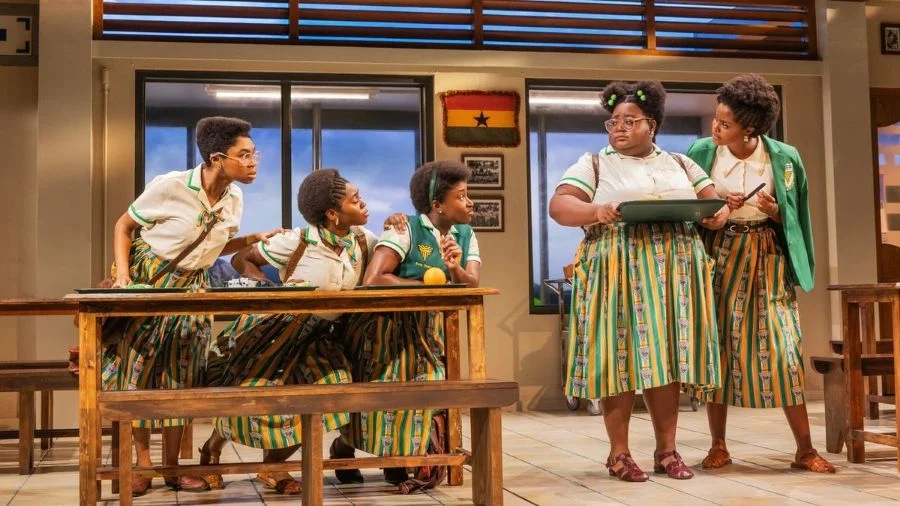
Wanted earns its place on Broadway largely through its performers and songs. Solea Pfeiffer is the standout, especially in “The Way I Am,” which she sings toward an unseen mirror—and, with striking directness, toward the audience. The show also joins a growing group of works examining colorism and passing, alongside Buena Vista Social Club, Schoolgirls, or the African Mean Girls Play, and the forthcoming musical adaptation of Imitation of Life by Lynn Nottage and John Legend. The grouping raises a larger question about how often theatre returns to these themes, though the material here doesn’t answer it.
Christopher Gattelli’s Broadway production of The Fantasticks is an easy charmer. I was wary of stretching the intimate Off-Broadway musical to the Helen Hayes Theatre, Broadway’s smallest house, but the production fills it with feeling while keeping its mischievous, sincere tone. Its same-sex reworking first appeared at Flint Rep in 2022; the change wasn’t what concerned me. What surprised me was how much the show’s two-act shape recalls Into the Woods, and how strongly the opening image of Act Two brings Sunday in the Park With George to mind. A search for earlier discussion led me to Austin Tichenor’s account of a fiery letter from Stephen Sondheim, recounted here.
At Philipstown Depot Theater in Garrison, New York, I saw The Glorious Death of Comrade What’s-His-Name, David Bridel, Raymond Bokhour, and Simon Gray’s musical adaptation of Nikolai Erdman’s 1928 play The Suicide. Bokhour is an old friend, so distance is impossible. Still, the score’s bracing, spicy character stood out: Bokhour wrote the lyrics, with music by Gray, for this absurdist farce about the costs of Soviet life.
A place for artists to land
The most concrete sign of what a city can make possible for its arts community came on a hard-hat tour of IndieSpace Hell’s Kitchen. The 5,500-square-foot community arts space occupies the ground floor of a new affordable housing building at 49th Street and 10th Avenue. IndieSpace executive director Randi Berry called the project “a home run,” pointing to its combination of affordable homes, an arts venue, and green space. The dirt outside the west-facing windows is slated to become Lorraine Hansberry Park when the space opens to the public in April 2027.
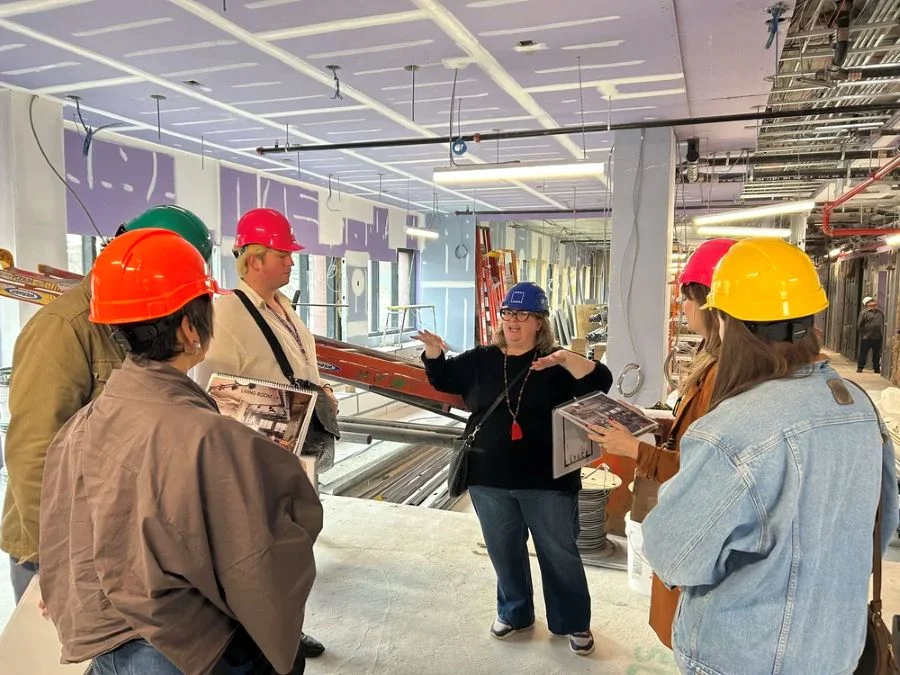
The schedule is striking. Berry said a process that could have taken 10 years of approvals and construction will take 18 months, in part because the project moved from the city’s Department of Cultural Affairs to its Housing Preservation and Development department. Construction is expected to cost about $8 million. The design includes a large meeting room that can be divided for simultaneous meetings and performances. Founded in 2016 to provide independent New York theatremakers with funding, development support, and advocacy, IndieSpace describes the new venue as “a soft landing place for artists.” That’s a useful ambition—and one the city’s next arts projects could learn from.

Discussion
Sign in to join the discussion.