A study of 1,441 productions found women held 38% of artistic roles, with representation varying widely across Broadway, Off-Broadway and regional theatre.
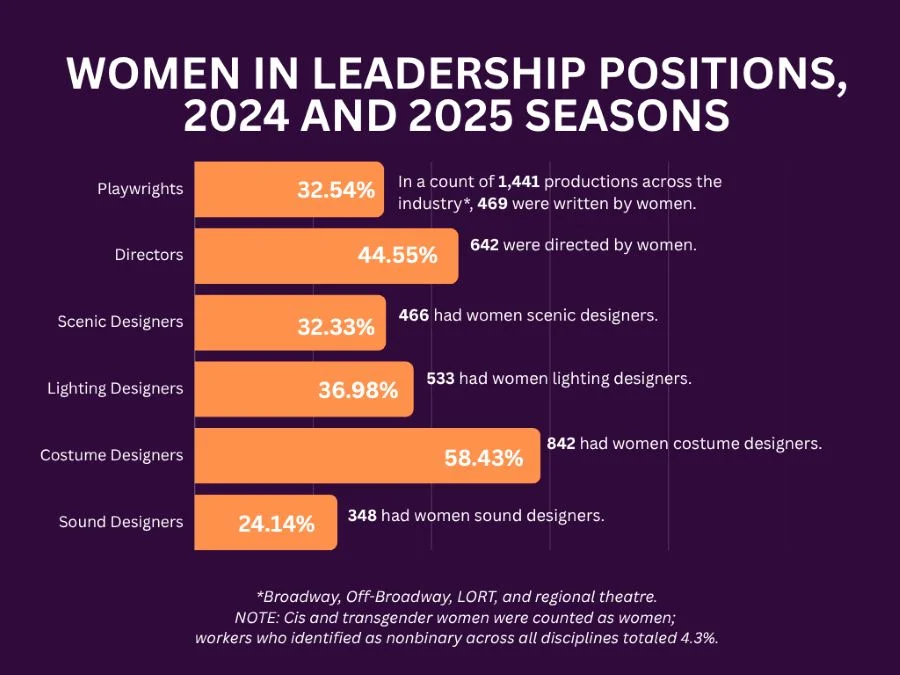
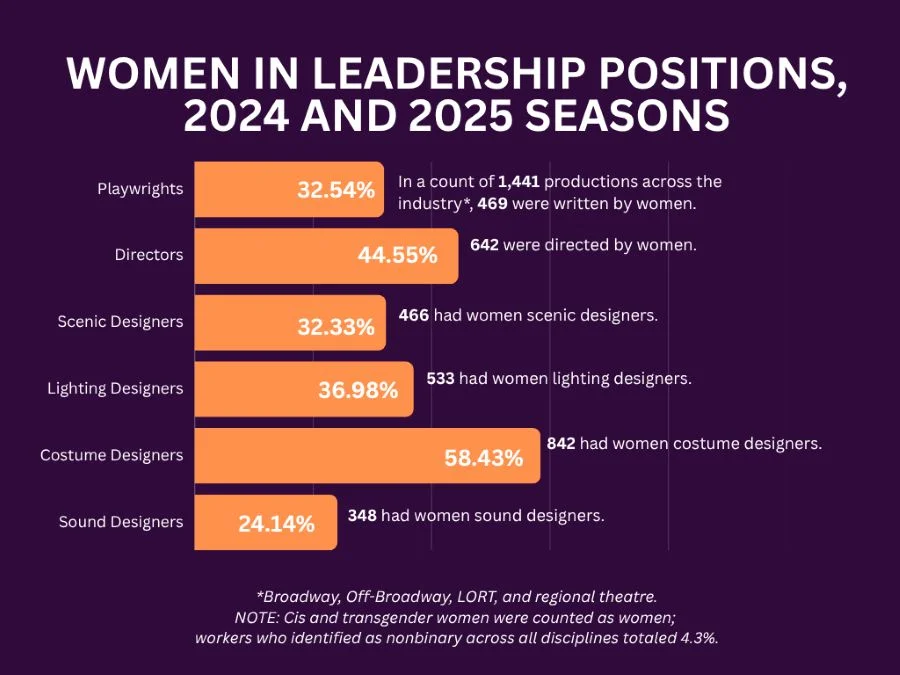
The numbers make one thing clear: American theatre has made progress on gender representation, but women still don’t share artistic leadership equally. A national study of 1,441 productions found that women held 38.13 percent of the 8,890 playwright, director and design positions examined. That’s a meaningful shift from the disparities documented in earlier research. It’s also a long way from parity.
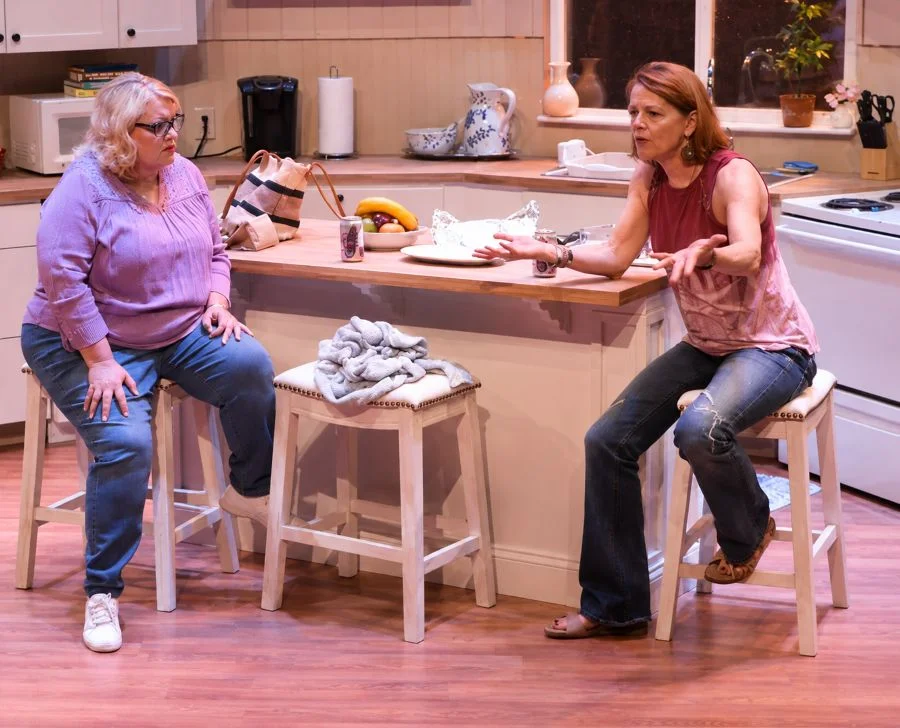
The question became personal for me on May 2, 2024. An email announced that Jen Silverman’s The Roommate was coming to Broadway, and I opened it thrilled. The play is an intimate two-hander about two women over 50: funny, tender, surprising, and attentive to the way women can be made to feel invisible. Its characters refuse that erasure.
I had directed the play at Lake Dillon Theatre Company in Silverthorne, Colorado. Our production closed the day after its first preview in March 2020, when the pandemic shut theatres down. Eighteen months later, I returned to direct it with the same cast and creative team. For me, The Roommate came to stand for rebirth. A Broadway run felt like a victory for a story I believed audiences deserved to see.
Then I read the production details. The Broadway staging would be directed by a man, with just one woman on the design team. Here’s the thing: a play inspired by a real middle-aged woman, built around two women and their experiences, was reaching one of the country’s biggest stages under an artistic team composed almost entirely of men. How had the industry arrived there again?
Gender parity had been a live issue across Broadway, LORT and regional theatre in 2018 and 2019, and earlier. Artists, organizations and institutions were asking who got to tell stories and who was hired to lead. The pandemic shifted attention to survival: theatres needed to reopen, keep staff and bring audiences back. Once productions resumed, I wanted to know whether the equity conversation had resumed too.
Beginning in August 2024, I worked with Lafayette College student researcher Brooke Suzman to study gender in artistic leadership. Lexi Handelman joined the project in January 2026. We tracked playwrights, directors, scenic, costume, lighting and sound designers working in the 2024 and 2025 seasons, along with artistic directors at LORT and regional theatres.
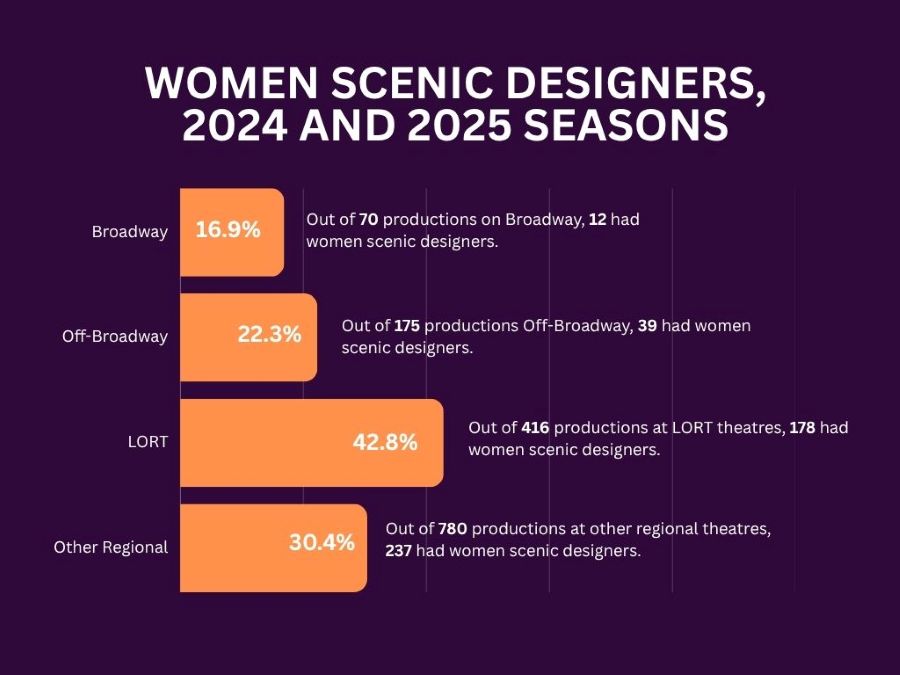
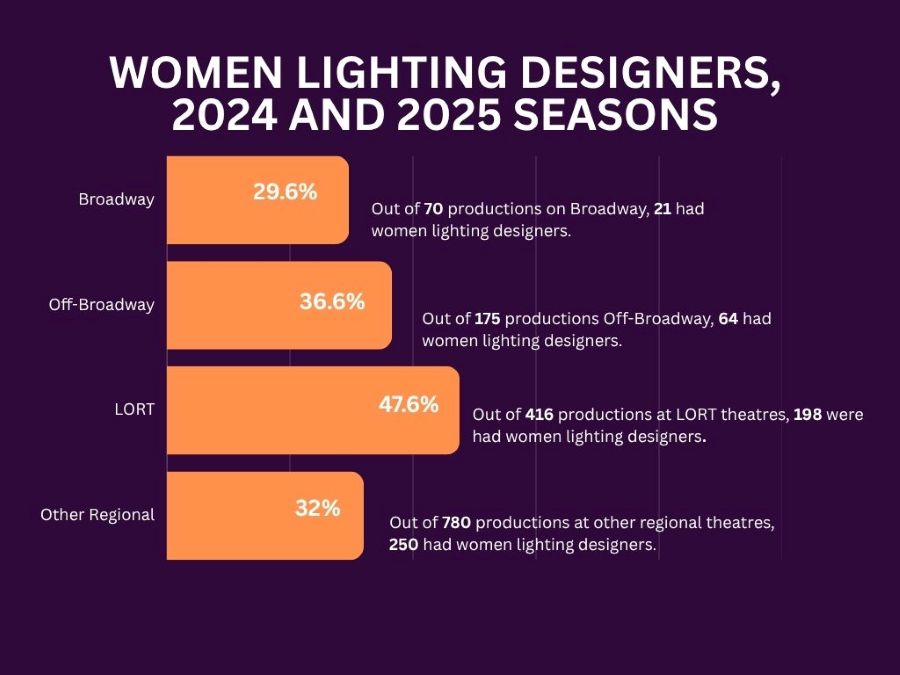
The sample covered 70 Broadway productions, 175 Off-Broadway productions, 416 LORT productions from 81 companies, and 780 productions at 153 regional theatres nationwide. No study can capture every production in a field this large. Still, 1,441 productions offer a substantial view of hiring patterns.
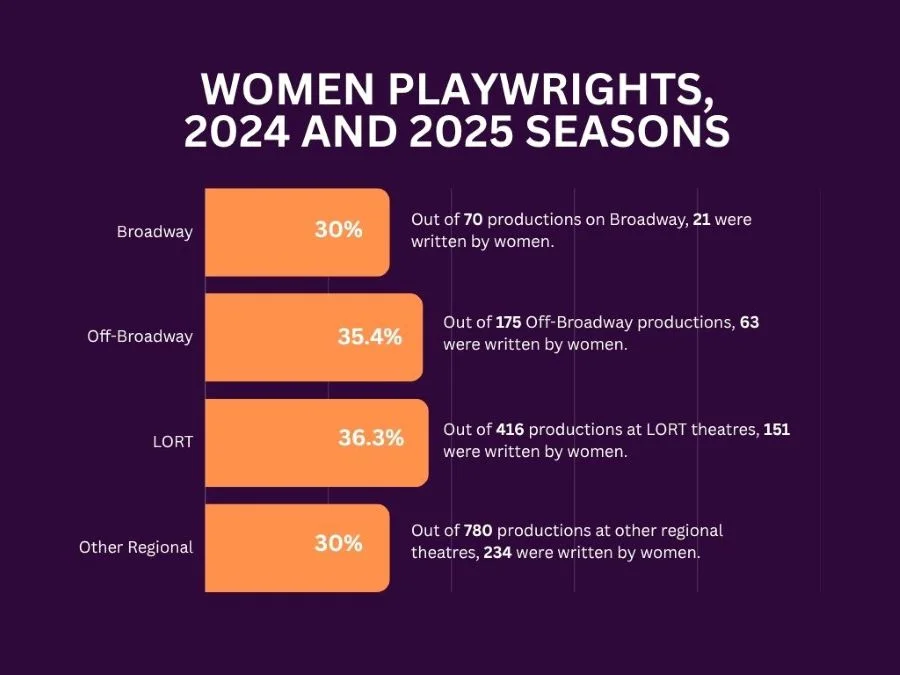
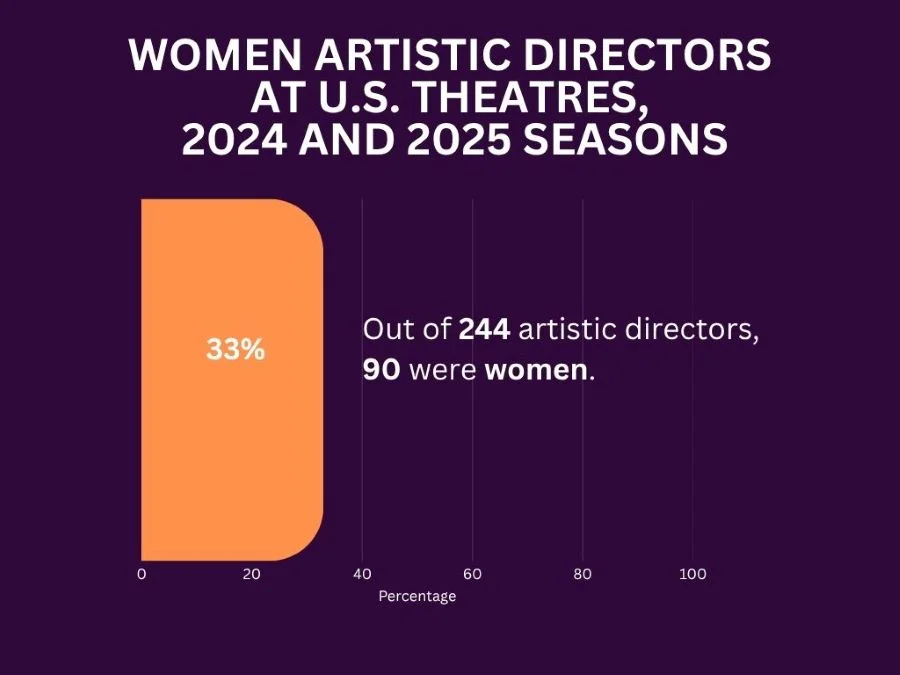
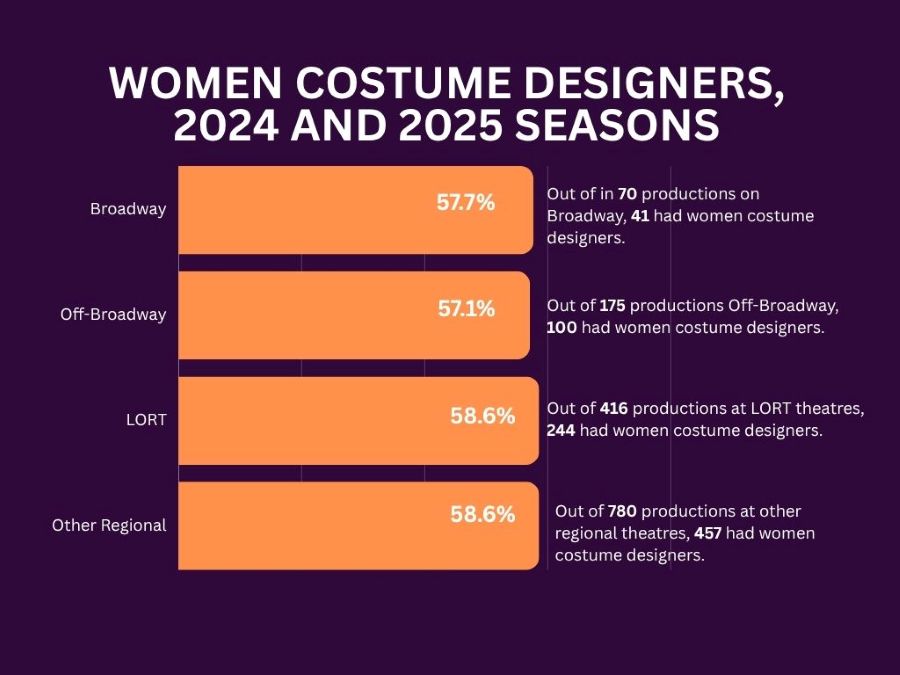
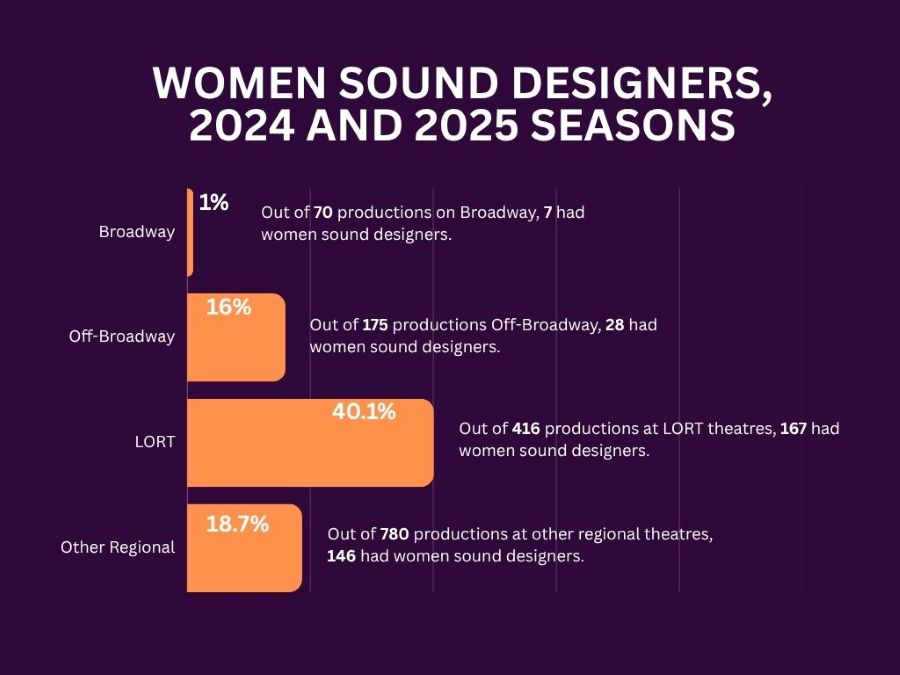
Women held 28.33 percent of the playwright, director and design roles in the Broadway sample, and 33.33 percent Off-Broadway. At LORT theatres, they held 45.18 percent of those roles and 32.18 percent of artistic director jobs. In regional theatres, women held 36.26 percent of the artistic roles and 39.49 percent of artistic director positions.
These figures suggest movement since studies of 2010–17 found women below 30 percent in several Broadway and Off-Broadway disciplines, especially lighting and sound design. Research from the Wellesley Centers for Women also found that women had historically held no more than 27 percent of leadership positions at American nonprofit theatres. The studies cover different parts of the industry, so the comparisons aren’t exact. But the direction is hard to miss: opportunities have grown, while equity remains unfinished.
And the totals don’t tell us who shapes the stories audiences see. Suzman, who spent two years on the project while studying psychology and theatre, said the research showed her how much equitable staffing matters—not only for women’s careers, but for the perspectives audiences encounter. She wants women to have an equal voice in both the stories told and the decisions that bring them to the stage.
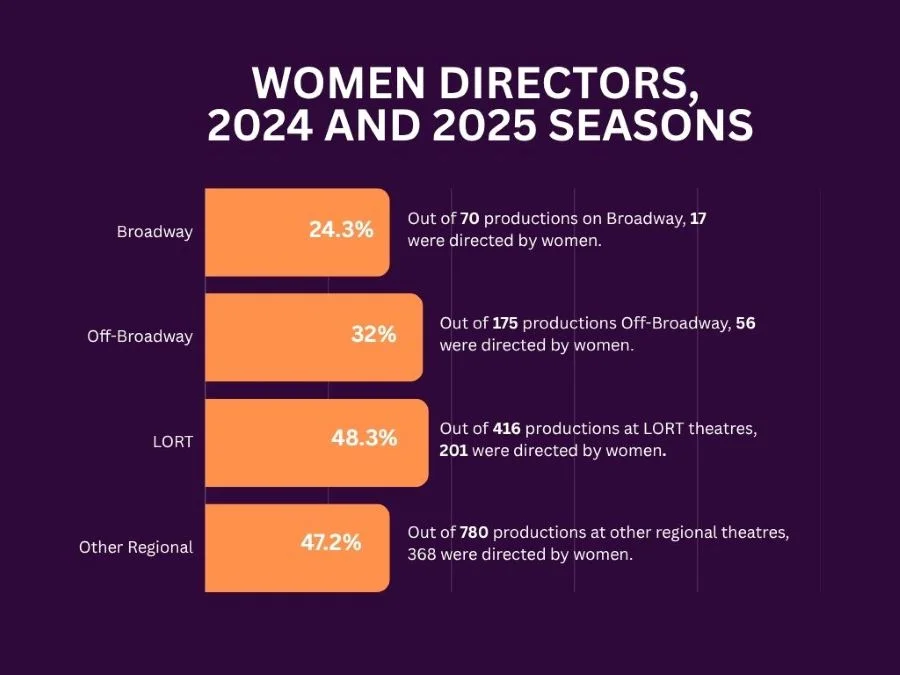
Handelman, who joined for the project’s final six months, described a production that changed her view of a classic play. After seeing it directed by men, she assistant-directed an adaptation under a woman director. That director brought a different understanding of women’s experience to the work, opening up an interpretation Handelman hadn’t encountered before. The experience sharpened her interest in telling stories that make room for women’s perspectives.
One finding stays with me: Of 245 Broadway and Off-Broadway productions in the sample, 74 centered on a woman character. Women directed 29 of them. Women-centered shows made up 30.2 percent of the productions surveyed, even though women account for about 69 percent of theatregoers in a typical season. The gap raises questions about access, authorship and whose perspective guides a story about women. It doesn’t diminish the work of male directors; it does make the distribution of opportunity harder to ignore.
For the study, we collected production information from public theatre websites, online playbills, season announcements and production pages. For each production, we recorded the playwright, director and four designers: scenic, costume, lighting and sound. We classified gender as women, men or nonbinary, using artists’ publicly stated identities and making no distinction between cisgender and transgender women or men. Nonbinary artists accounted for 4.3 percent of the positions studied. Because the research relied on public information, it may miss identities artists haven’t disclosed. We organized the records by production, theatre, season, discipline and role so we could examine both individual fields and the combined totals.
Discussion
Sign in to join the discussion.