From the Borg’s first attack to TNG’s final poker game, these episodes show how Patrick Stewart made Picard’s restraint, doubt and humanity compelling.
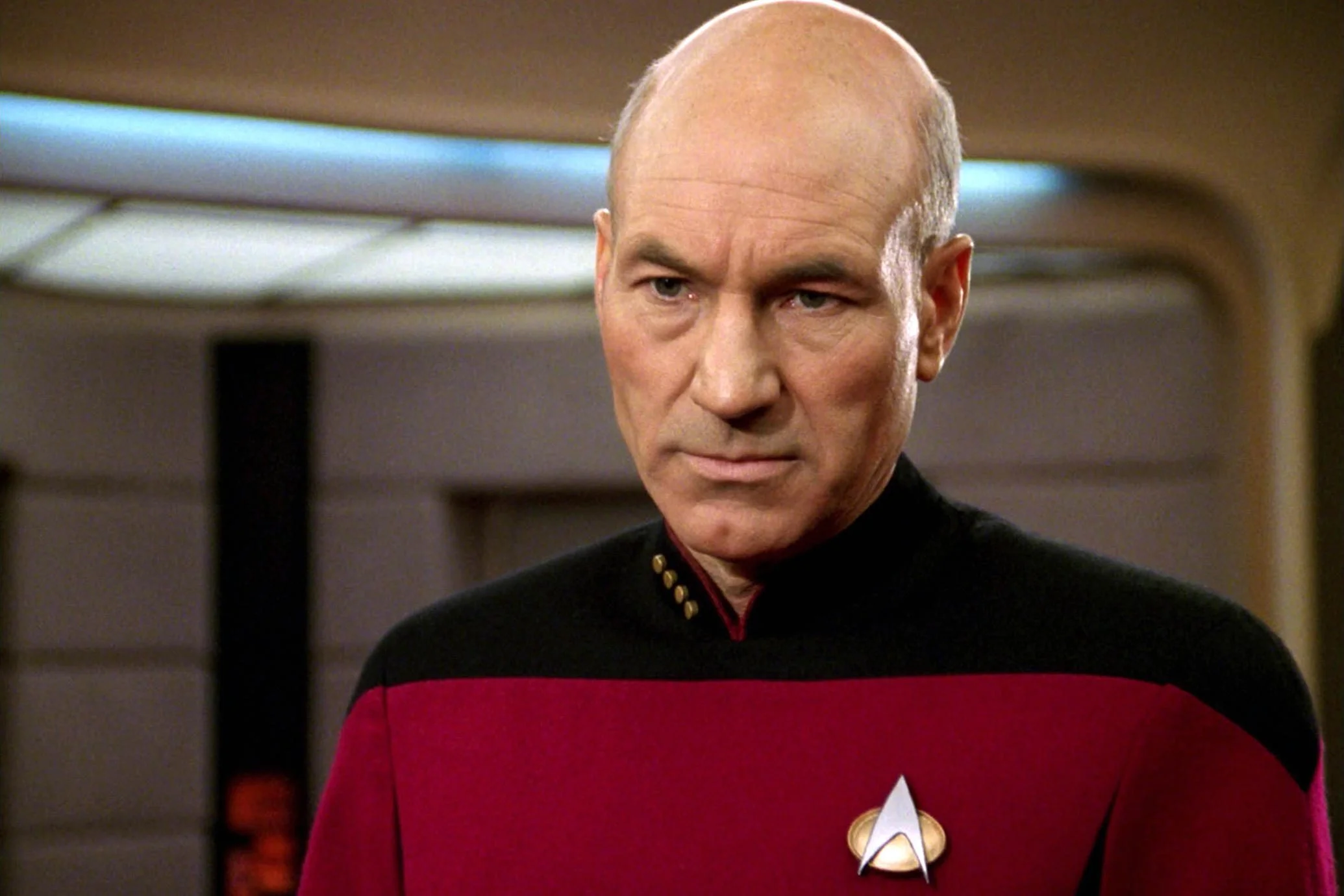
Jean-Luc Picard’s authority is easy to recognize; his vulnerability is what makes him difficult to forget. Across Star Trek: The Next Generation, Sir Patrick Stewart built a captain whose composure could signal strength, distance or fear, often all at once. These ten episodes show how much dramatic range he found inside that reserve.
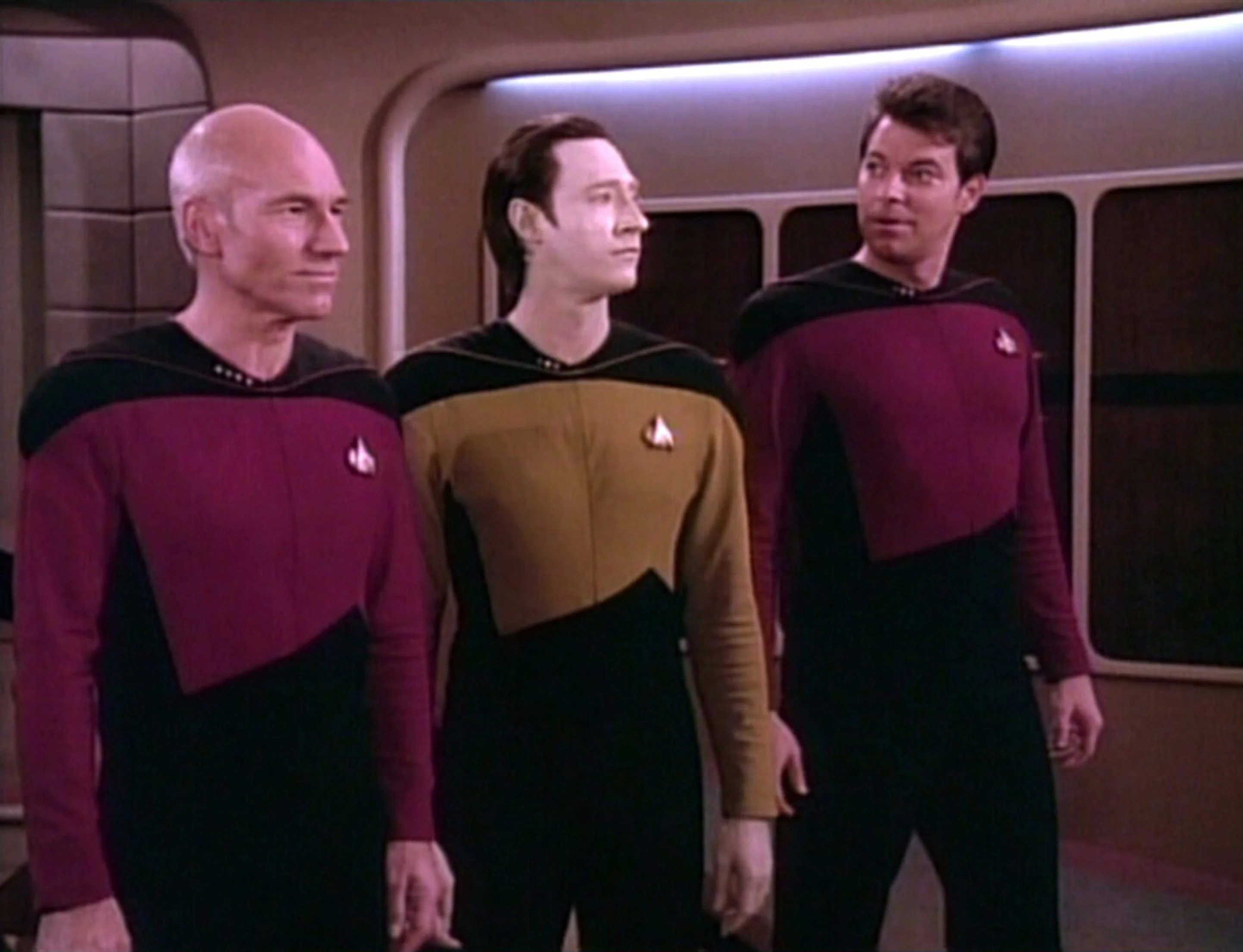
The series itself once put Picard’s place in doubt. At the end of season three, with the captain assimilated by the Borg, Commander Riker orders the Enterprise-D to fire on the enemy ship. The command became a cliffhanger because the threat felt real: TNG might continue under Riker, with a different temperament at its center. That possibility would have changed the show. Stewart’s performance is a large part of why the story never needed to.
Picard isn’t simply a stern authority figure. He’s a diplomat and an intellectual who trusts Starfleet’s principles, yet can mistake confidence for certainty. Stewart makes that conviction magnetic without making it infallible. When the captain’s control gives way, the contrast lands because the performance has earned it.
When Picard’s certainty fails
“Q Who” (season 2, episode 16) introduces the Borg as a danger Picard can’t solve by reasoning harder or commanding more firmly. Q throws the Enterprise-D across the galaxy to make a point about Starfleet’s unreadiness. Picard dismisses the intervention with “Your help is not required,” convinced that his own judgment and the Federation’s principles will be enough. Q’s lesson is brutal. Stewart’s best work comes as the captain’s assurance drains away and he must ask the being he dismissed to save his crew. The moment doesn’t diminish Picard; it makes his limits visible.
“The Drumhead” (season 4, episode 21) puts that same moral confidence under pressure from inside the Federation. An investigation into suspected sabotage grows into a search for conspirators, and the Enterprise becomes a stage for escalating suspicion. Jonathan Frakes directs the character drama without relying on action. Stewart plays Picard’s frustration as a steady build, until a courtroom interrogation gives it forceful release. His warning about the damage done when freedom is trampled—“The first time any man’s freedom is trodden on, we’re all damaged”—turns the episode’s argument into a personal test of his principles.
“The Wounded” (season 4, episode 12) gives Miles O’Brien the central emotional story and introduces the Cardassians, whose history with him is marked by trauma and resentment. Picard’s part is smaller, but his closing exchange with a departing Cardassian commander sharpens the episode’s view of diplomacy. Peace, Picard makes clear, shouldn’t be mistaken for naïveté. Stewart delivers the warning with restraint, revealing a captain who can seek understanding without surrendering his judgment.
The cost of keeping control
“Sarek” (season 3, episode 23) brings back Mark Lenard as Spock’s father, but the story’s emotional center is the connection between Sarek and Picard. Both men are defined by discipline, and when Picard agrees to take on Sarek’s emotional burden through a mind meld, the captain’s composure collapses. He sobs, rages and struggles to contain feelings that aren’t entirely his own. Lenard’s tearful moment at a music recital is unforgettable; Stewart’s breakdown gives the episode its other essential counterpoint. Watching Picard lose control feels startling precisely because he so rarely allows it.
“Family” (season 4, episode 2) follows the aftermath of Picard’s assimilation by the Borg by taking him away from the Enterprise and back to his family’s vineyard on Earth. His brother Robert resents Jean-Luc’s success; Picard, in turn, envies the rooted life Robert has built. Their arguments expose a sibling relationship that Starfleet rank can’t smooth over. As the brothers begin to reconcile, Picard faces the shame and guilt attached to what the Borg forced him to do. Stewart’s performance makes the admission feel earned: the captain’s vulnerability has weight because his public self has been so carefully controlled.
“Chain of Command” (season 6, episodes 10 and 11) first unsettles Picard by taking him off the Enterprise-D on a covert mission with Worf and Dr Crusher. He is then captured by the Cardassians and interrogated by Gul Madred, played by David Warner. The torture is designed to strip away his dignity and force submission. Stewart doesn’t turn the ordeal into a display of heroic invulnerability. Instead, he lets Picard’s fear and exhaustion show, while preserving the struggle to hold onto his identity. It’s among the series’ starkest demonstrations of how much can be communicated through a captain’s resistance when his usual authority has been taken from him.
Lives Picard might have lived
“The Inner Light” (season 5, episode 25) gives Picard a lifetime somewhere other than the Enterprise. An energy beam leaves him unconscious for 25 minutes in the crew’s experience; in his mind, he lives for decades as Kamin on another world. Stewart’s challenge is to make this life feel both separate from and connected to Picard. Kamin has the captain’s curiosity and intelligence, but his relationships and experiences belong to a different person. The episode’s emotional force rests on that balance, and on the disorientation of returning to the Enterprise after a lifetime has passed internally.
“Tapestry” (season 6, episode 15) turns regret into a question of identity. Dying on an operating table, Picard is offered a chance by Q to revisit his youth and change the decisions he now wishes he’d made differently. The alternate life Q shows him is safer, but leaves him an unremarkable junior officer, “bereft of passion and imagination.” Picard’s answer—“That is not who I am”—isn’t a claim that every mistake was worthwhile. It’s recognition that changing those choices would also change the person he became. Stewart gives the idea a personal edge: this self-assured captain has regrets, and he has to decide what they mean.
“Lessons” (season 6, episode 19) lets Picard fall in love with Lieutenant Commander Nella Daren, a science officer who joins the ship. His relationship with Dr Beverly Crusher has long sat behind the captain’s professional restraint, but Daren makes his boundaries harder to maintain. The turning point arrives when Picard must send her on a mission that puts her life at risk. His feelings don’t erase his duty, and his duty doesn’t make those feelings disappear. The story offers a glimpse of the man beneath the uniform while making clear why he keeps his private life at a distance from command.
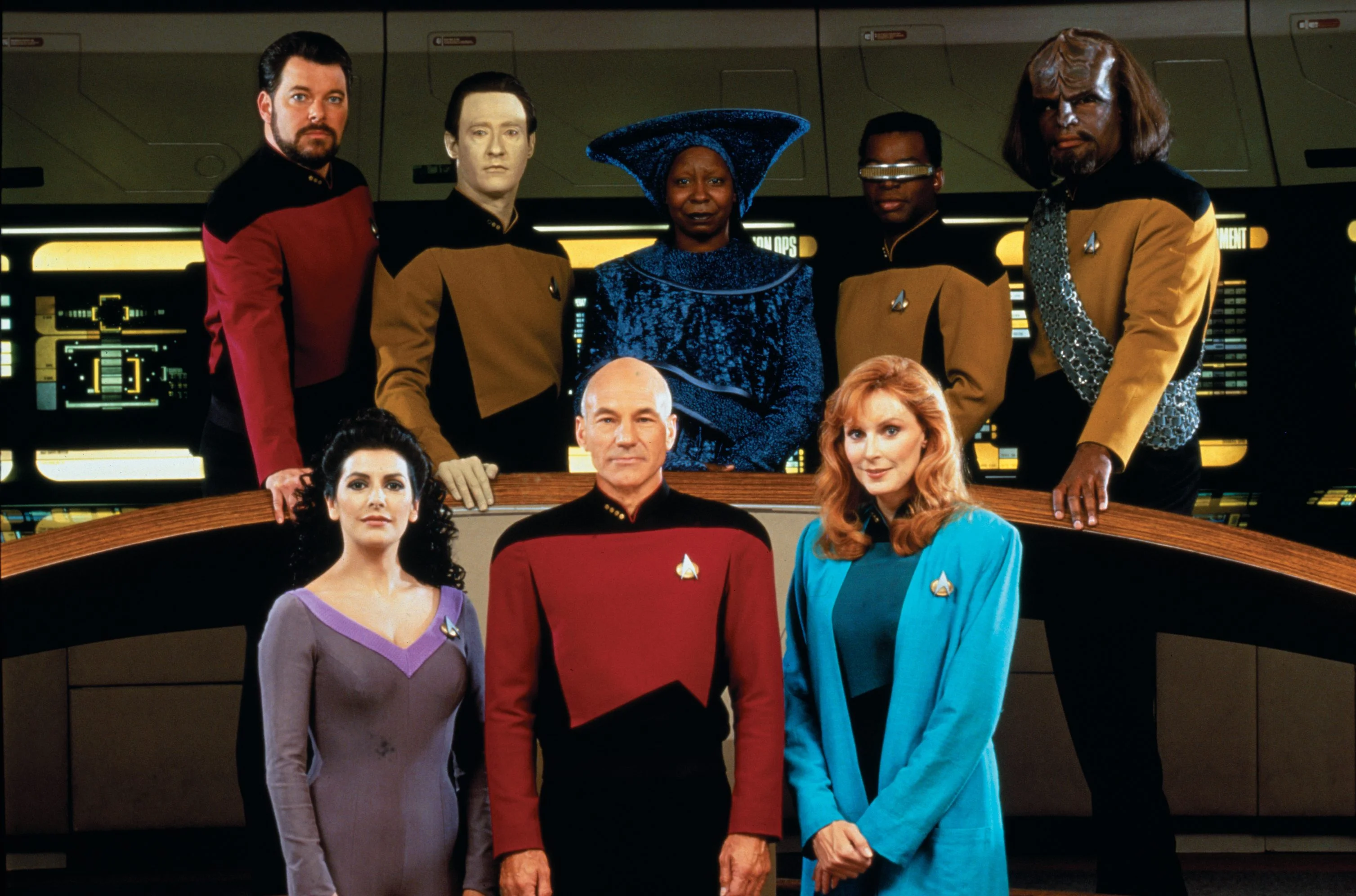
“All Good Things…” (season 7, episodes 25 and 26) gives Picard a final test by sending him between past, present and possible future. The time shifts make the captain’s centrality literal, but the finale’s most telling choice is quieter. For years, Picard has stood apart from the senior staff’s regular poker game. At the end, he takes a seat at the table. The gesture isn’t a sudden personality change; it’s a small opening in a boundary the series has established for nearly 180 episodes.
Stewart returned to Picard in four feature films and the sequel series Star Trek: Picard, but the captain’s later, more action-oriented or openly emotional portrayals don’t quite reproduce the particular balance TNG built. That’s no slight against revisiting the character. The finale simply leaves little unfinished business: Picard has faced his past, accepted his crew’s company and joined a game he once watched from outside. For a captain defined by control, that modest act makes a fitting farewell.
“All Good Things…” works because it closes Picard’s story without pretending he has stopped changing. The poker game offers a concrete glimpse of what comes next: a little more room for connection. View Green Video on the source website
Star Trek is available to stream on Paramount+ in March 2027.
Add Star Trek: Starfleet Academy to your watchlist on the Radio Times: What to Watch app – download now for daily TV recommendations, features and more.
Check out more of our Sci-fi coverage or visit our TV Guide and Streaming Guide to find out what's on. For more TV recommendations and reviews, listen to The Radio Times Podcast.
Discussion
Sign in to join the discussion.