The New York Stage & Film Festival showcases the profound impact of audience engagement on new theatrical works and their development.
As attendees filled the Symphonic Hall at Marist University in late July, the air buzzed with anticipation. This wasn’t just another performance; it marked the arrival of the final character in the creative process: the audience. Kicking off the event, a cast member asked participants where they had traveled from to attend the New York Stage & Film Summer Season, eliciting a delightful array of responses from various cities, including a gentle acknowledgment of Poughkeepsie, the festival's home for over four decades.
Many audience members had journeyed significant distances to witness what could be the next big hit before it reaches Broadway or similar venues. I, too, made the trek—over seven hours by plane, bus, and train—and found every moment of the journey worth it as I immersed myself in the weekend's diverse offerings of new works. A scenic ride on the Metro-North Railroad from Grand Central into Poughkeepsie, with picturesque views of the Hudson dotted with sailboats, adequately set the stage for this theatrical retreat.
“This is a refuge for artists, away from the pressures of critical and market demands,” remarked Ian Belknap, the artistic director of New York Stage & Film. He expressed an enthusiasm for witnessing how audiences react to the performances—a critical component of the artistic journey. “The audience’s responses are a vital part of our work, representing the final character in this ongoing narrative,” he noted. This perspective resonated throughout various conversations I had during the festival.
Since its inception in 1985, New York Stage & Film has been at the forefront of cultivating new theatrical works, having developed over 1,000 productions. Of these, 20 have made their way to Broadway, while 150 have graced Off-Broadway stages, and more than 60 have found homes in regional theaters. This summer's festival showcased projects that were being presented for the first time, and the palpable excitement of sharing these creations made clear the significance of events like this in the theater world.
“It’s genuinely refreshing to engage with a non-New York audience, as city audiences can possess specific expectations,” explained Chay Yew, who directed a presentation of the musical Paper Menagerie. “The NYS&F crowd brings a unique perspective; they have no preconceived notions, leading to more unfiltered reactions that inform our work's next steps.” His insights underscored a growing concern: the shrinking number of such developmental laboratories, which have historically been essential for the evolution of American theatre. “In the last decade, we’ve seen these spaces dwindle from around 20 to only a handful, yet NYS&F remains consistent,” Yew stated.
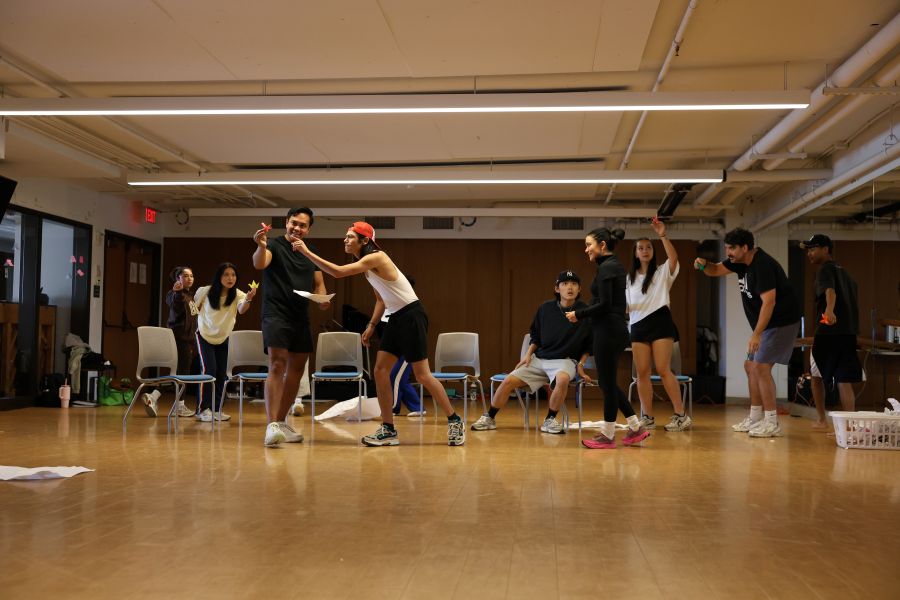
Over the course of the festival, I experienced four sold-out readings attended by a richly diverse audience, making it evident that New York Stage & Film serves not just as a sanctuary for daring artists but also as a haven for curious viewers. The audience included seasoned theatre enthusiasts and artists involved in the projects presented. I even spotted Mark Linn-Baker and Max Mayer, two of the founding members of the company, among the crowd.
With about 350 artists contributing to eight new plays, three musicals, and 14 screenplays, the energy at the festival was electric. One particularly compelling moment was witnessing Quiara Alegría Hudes, Pulitzer Prize-winning playwright known for Water by the Spoonful and In the Heights, lead a reading of her latest play, Menafee. Directed by Hudes, the piece explores the real-life story of Corey Menafee and how personal integrity can inspire systemic change.
Rehearsals entirely occupied the third floor of the Marist Student Center. Some projects had benefited from two weeks of focused practice, while others like Menafee had just five days of development before their public reading.
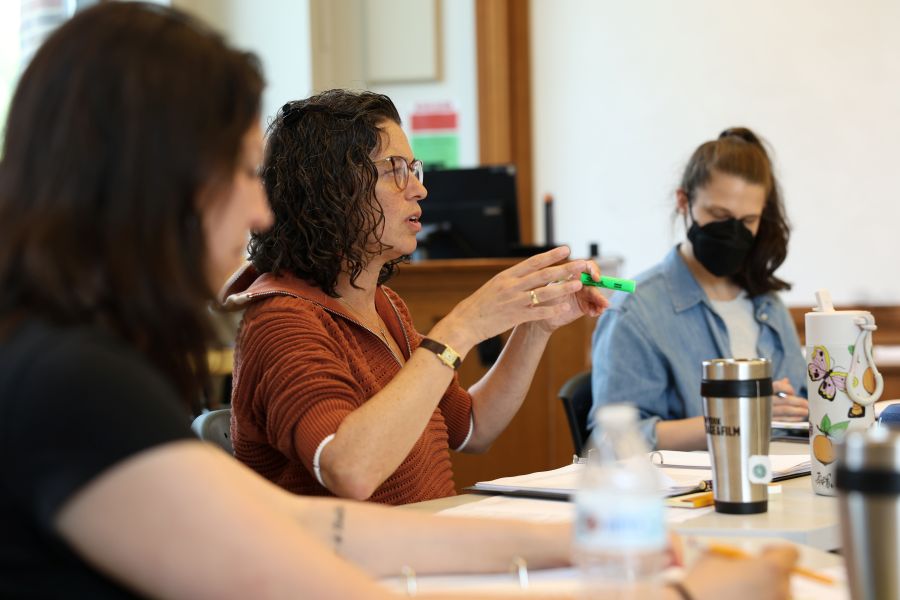
The rehearsal room was alive with energy as Hudes and her cast, including Tony Award winner Priscilla Lopez, gathered in a circle, revisiting the script and engaging in lively discussions about their characters. It was a vivid expression of collaboration and creativity, reflecting Belknap's earlier sentiment about the accessible presence of playwrights in the room. “In my education, I never actualized the presence of a living playwright,” Belknap admitted. “Here at NYS&F, you witness the playwright's intentions firsthand; it adds a profoundly rich layer to the process.”
Watching the rehearsal of Menafee felt like observing an intricate dance of creativity. Actors were actively engaged in dialogue with Hudes, raising queries that prompted deeper reflections from her. At one instance, she turned to Ronald Peet, who embodied the title character, asking, “What’s your insight, Ronald? You're the one portraying this role.”
After the workshop, Hudes shared her amazement at the process of creating a new work, emphasizing the privilege of witnessing its inception. “It's an exhilarating experience. NYS&F has cultivated an audience eager to embrace the early drafts of creative projects,” she noted. In the public reading following her comments, Hudes revealed she had added an eighth character for the play after learning that a student reporter would be attending the event, further connecting the story to its reality.
Hudes wasn’t merely an observer; she actively listened for moments when the audience engaged with the performance. “They were leaning in, and their laughter felt like a gift. One of my characters delivers a hefty monologue in the second act, and the audience's applause at its conclusion was unexpected; it was as if they were honoring the performer’s physicality and emotional investment,” she said. “These are insights that only emerge with live audience interaction.”
There's something uniquely enriching about the audience witnessing the first public performance of a work. During the reading of Kate Cortesi’s Daylight, which explores the true story of Joe Garcia, a prisoner who found solace in Taylor Swift’s music, the audience’s engagement was palpable. I found myself captivated not just by the narrative but by the emotional response it elicited from Garcia himself, who was present in the audience.
The musical Boom for Real, featuring a score by John Legend and a book by Marcus Gardley, delves into the life of 20th-century artist Jean-Michel Basquiat. Here, director Kamilah Forbes invited the audience into an “exploratory space,” blending rehearsal elements with performance.
As I observed the dynamics of audience engagement, I noticed Gardley and Forbes in the back watching attentively, keen to learn how the presentation resonated with those in their seats. Theatre, after all, is not merely about the performance; it's a shared experience that unfolds in real time.
A conversation with Forbes touched on the diminished availability of spaces for work development. “Facilities like The Lark Play Development Center and Sundance Theater Lab are becoming scarce. These environments are essential for refining work; without them, plays are often released prematurely into the world. We run the risk of sharing undercooked material as final products,” she expressed.
Before the audience can serve as a final collaborator, artists must first have the space to nurture and develop their projects. Each performance at NYS&F reflected this necessity, creating a moment for creators to test their ideas and for the audience to be integral parts of that journey.
The festival concluded with another lively performance, Trip Around the Sun, a poignant yet humorous tale set in a Florida retirement community, written by Jake Brasch and directed by Shelley Butler. The audience's reactions varied dramatically, from uproarious laughter to momentary silence, illustrating the range of emotional responses that theatre can evoke.
Amid my own laughter, I could see others sharing in the joy, a testament to the power of theatre to foster connection and dialogue. Whatever happens to Trip Around the Sun post-festival, the experience forged between the team and its initial audience had already imprinted its significance on the play's evolution.
Cristina Marie Pla-Guzman is a performer, director, playwright, theatre journalist, and award-winning theatre educator. She is a member of the American Theatre Critics Association, a Theatre Communications Group Rising Leader of Color for Theatre Journalism, and a fellow of the Eugene O’Neill Theater Center’s National Critics Institute.


Discussion
Sign in to join the discussion.