The One Ring is forged, and Sauron’s surrender to Pharazôn may be the opening move in a larger plan for Númenor.
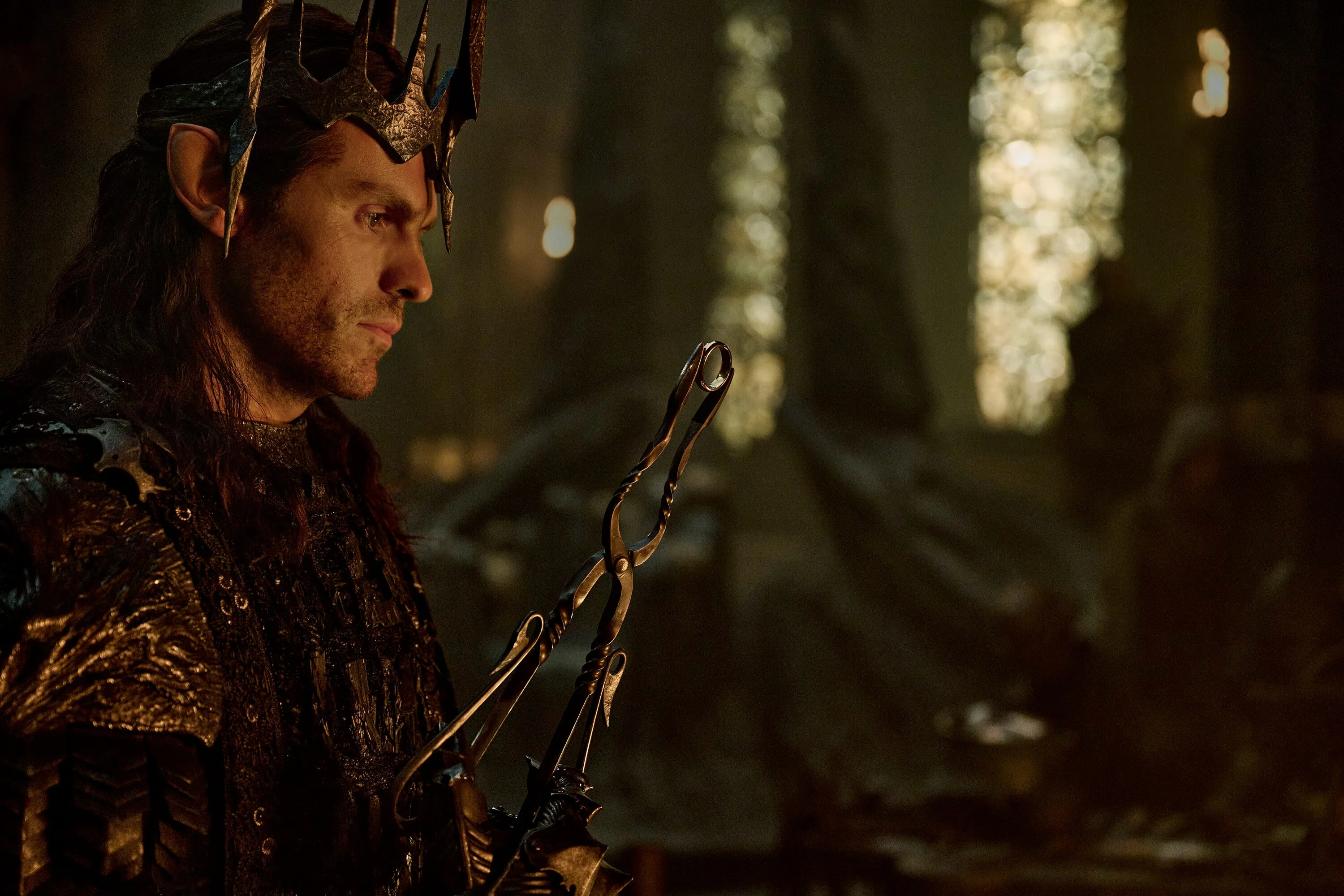
The One Ring’s creation changes the central question in The Lord of the Rings: The Rings of Power. For two seasons, the story has built toward the forging of the Rings; by the end of season 3, they’re all in existence. The next phase turns on what that power does to Middle-earth—and on whether Sauron can turn an apparent defeat into a route to control.
That shift gives the season finale its tension. Sauron, played by Charlie Vickers, appears to surrender to Pharazôn, the king of Númenor. But the gesture comes after a change in the balance of power: Gandalf has helped turn the Dark Wizard against Sauron and cut down a large part of Sauron’s army. Facing the possibility of a costly stalemate, Sauron chooses a different move. The question isn’t whether he has given up; it’s what he expects to gain by being taken prisoner.
Co-showrunners Patrick McKay and J.D. Payne describe season 3 as both a culmination and a pivot. Their stated aim was a more concentrated, psychologically demanding season that began forcefully and kept its pace. The One Ring supplied the organizing thread: Sauron’s attempt to make it connects the season’s stories to his larger ambition to dominate the world.
“You’re seeing the end of one part of the story, and the beginning of another,” McKay said. The Ring’s completion gives that transition a concrete marker. As he put it, the Rings’ creation has been the throughline of this era of Tolkien’s mythology; now Middle-earth has to live with the consequences.
Sauron’s personal motive behind the One Ring
The Ring’s purpose is domination, but the showrunners also tie Sauron’s ambition to his history with Galadriel. In the first season, he befriended and deceived her while posing as Halbrand. By season 3, Celebrimbor’s taunts sharpen the conflict: Sauron can’t make a Ring powerful enough to dominate the other Rings—or Galadriel, who has rejected him.
That rejection, Payne said, helps explain the intensity of Sauron’s pursuit. The One Ring is a weapon against the other bearers of power, but it’s also bound up with his desire to control someone who has refused him. The personal grievance makes his grand strategy more legible without making it less dangerous.
The finale’s surrender follows the same logic. Payne describes Sauron as skilled at constructing situations where his opponents face only bad options. Once Gandalf’s intervention changes the battlefield, Sauron has to weigh whether to risk his army in a fight that could end in stalemate. If he can’t defeat Pharazôn directly, captivity may offer another path.
Galadriel understands that distinction. She knows Sauron well enough to read the surrender as a calculated move, even as others might take it for victory. The showrunners point to the lore surrounding Sauron’s capture and arrival in Númenor as a source of dramatic foreboding. Vickers’ slight smile at the end leaves the audience with the same suspicion: the king may have won the moment while giving Sauron access to a more useful position.
Pharazôn’s rise carries its own danger
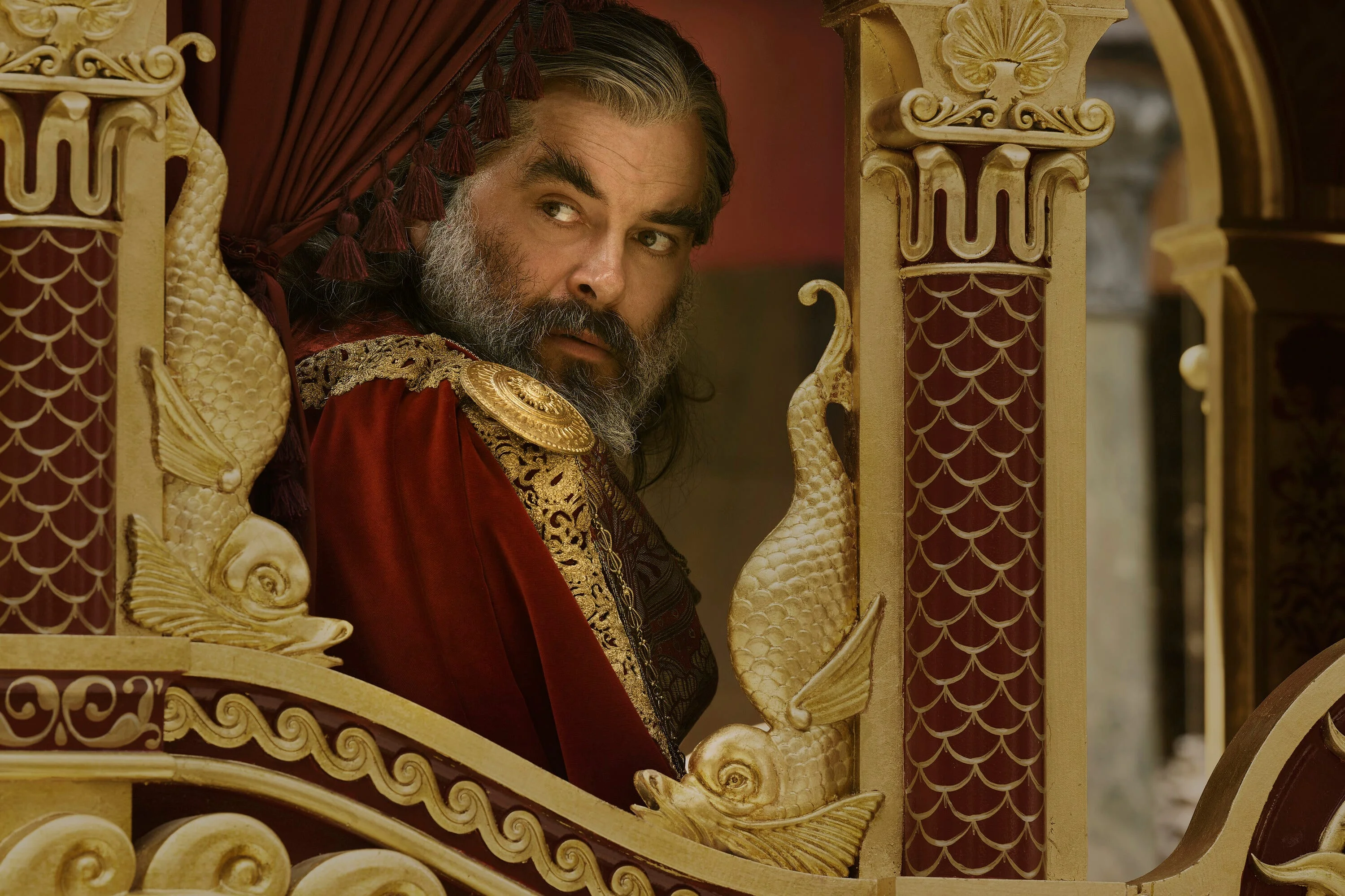
Pharazôn is no incidental opponent in that calculation. McKay calls him a major figure in the mythology, introduced earlier as a politician accumulating influence. In season 3, he has been king for only five days and is enjoying what McKay calls his golden era. Beneath the confidence, though, sits insecurity—particularly a rivalry with the blacksmith who escaped and now claims the title of Lord.
That professional jealousy feeds Pharazôn’s drive to confront Sauron. He wants to prove that he, rather than his rival, holds power. McKay likens the two men to “Stalin to Sauron’s Hitler,” describing a pair of self-important figures whose ambitions set them on a collision course. The comparison is the showrunner’s shorthand for their rivalry; the dramatic point is that Pharazôn’s appetite for power makes him vulnerable to Sauron’s ability to manipulate events.
Trystan Gravelle’s performance, McKay said, gives the character strong presence on screen. Pharazôn’s political skill and personal insecurity operate together: he can maneuver effectively, but his need to demonstrate authority may push him toward choices that serve Sauron’s plans.
A talking Balrog and a wider Tolkien mythology
The season also takes a conspicuous step beyond what viewers may expect from the familiar books and films: the Balrog speaks. McKay says the choice came from looking beyond The Lord of the Rings to Tolkien’s wider body of writing, which imagines a much larger world and history.
In that mythology, Balrogs belong to the Maiar, a class of powerful beings that also includes Gandalf and Sauron. McKay says they can cast spells, command troops and think for themselves. The Balrog’s speech is therefore an unexpected moment on screen, but one the showrunners see as consistent with the being’s place in Tolkien’s world. For the season’s story, the encounter also gives Sauron a way to learn how Mount Doom’s fires can be used to forge the One Ring.
The Ring itself stays close to its established description. McKay says the books specify a plain gold band, leaving little room to redesign its essential appearance. The production made it wider and chunkier for the camera, but the guiding principle was to keep it recognizably the One Ring.
Gandalf and Sauron embody opposing ideas of power
Gandalf’s confrontation with Sauron brings the season’s argument about power into focus. Tolkien didn’t write this particular encounter, McKay notes, but the storyline draws on references to wizards who went east and may have helped keep those regions from joining Sauron. The series uses that thread to bring major figures from the mythology face to face.
Payne describes their contrast in moral terms. Sauron pursues power without limit; Gandalf is told that reaching the greatest power requires giving up every other claim to power. When Sauron offers him the world, Gandalf refuses. That decision sets the two characters on opposite paths—and points toward the weakness Sauron creates for himself by trying to possess and control everything.
The One Ring’s creation closes one stage of the Second Age story, but the showrunners frame its consequences as the beginning of a longer tragedy. The Rings now shape the world that will persist for thousands of years. Sauron’s capture in Númenor, Pharazôn’s ambition and Gandalf’s refusal all lead into the same unresolved question: with the Ring forged and power concentrated in dangerous hands, who can still control what happens next?
Discussion
Sign in to join the discussion.